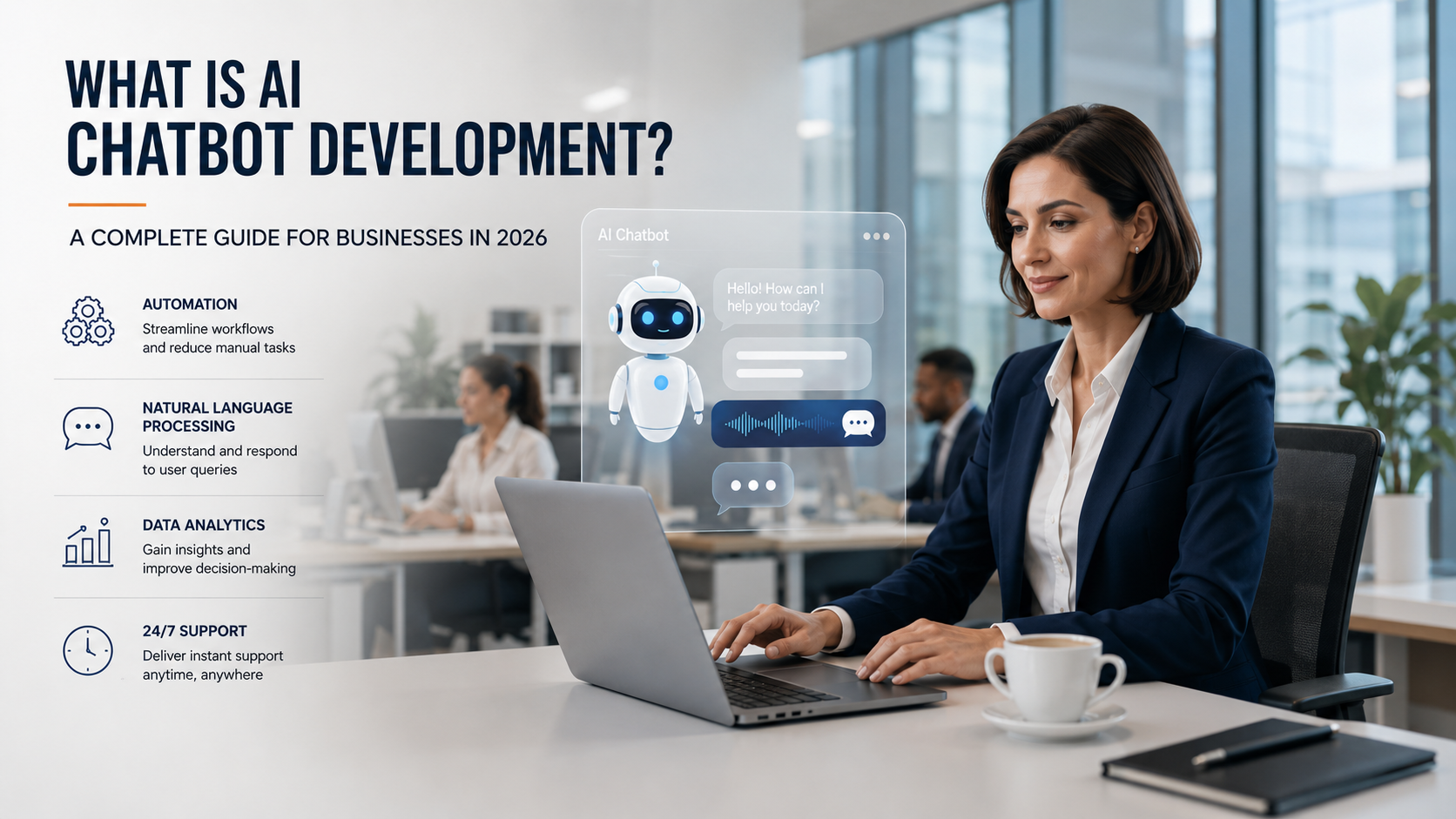
Why businesses are investing in AI chatbots
Customer expectations have changed dramatically over the last few years. People expect instant responses, personalized interactions, and support that is available 24/7. Businesses that rely solely on manual communication often struggle to keep up with growing customer demands.
This is where AI chatbot development comes in. AI chatbots are transforming the way businesses interact with customers, automate operations, generate leads, and provide support. From answering customer queries to helping sales teams qualify prospects, AI chatbots have become an essential business tool.
In this guide, we'll explore what AI chatbot development is, how it works, its benefits, common use cases, and why businesses are increasingly investing in AI-powered conversational solutions.
What is AI chatbot development?
AI chatbot development is the process of designing, building, training, and deploying intelligent chatbots that can understand human language and interact naturally with users.
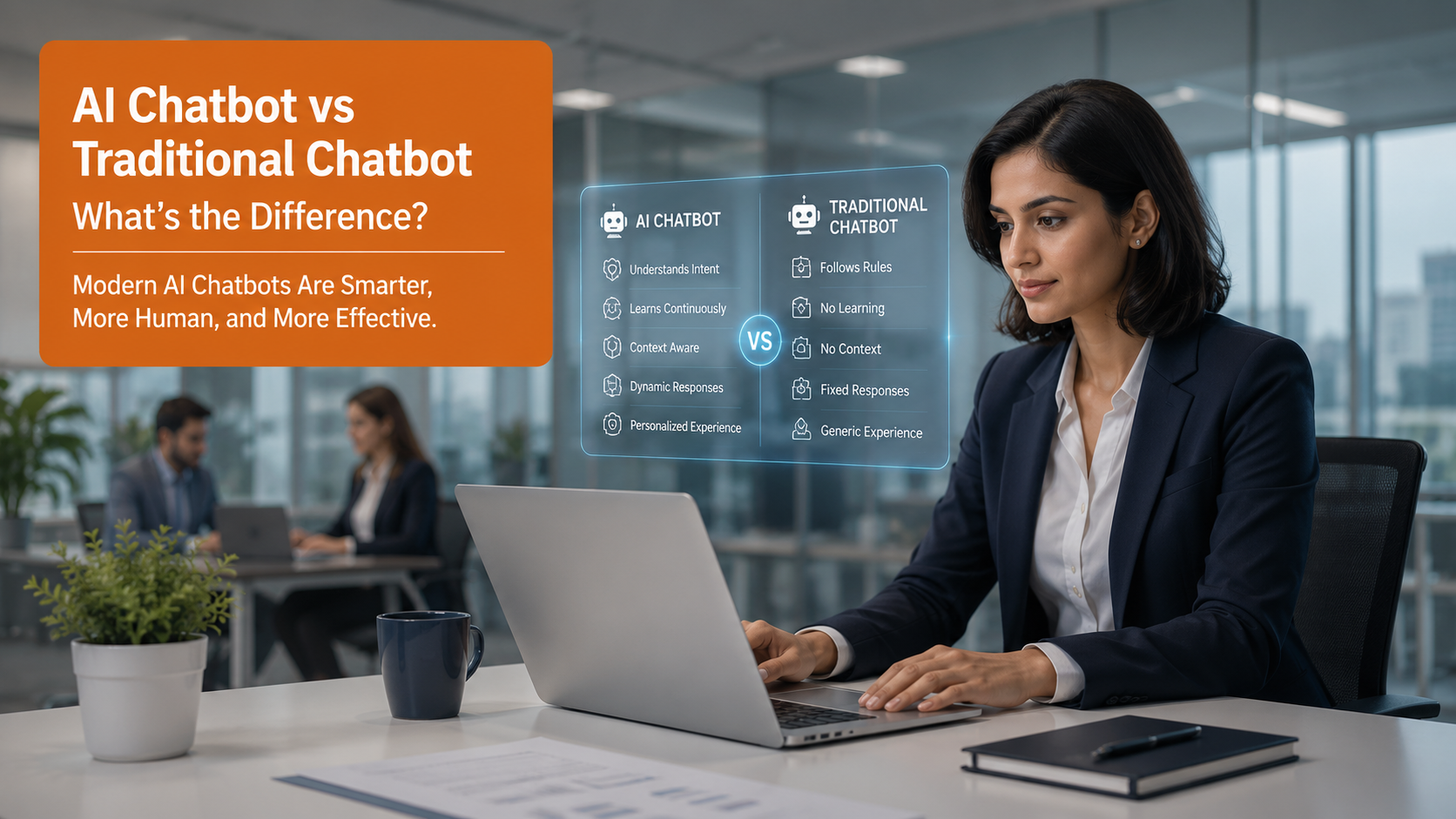
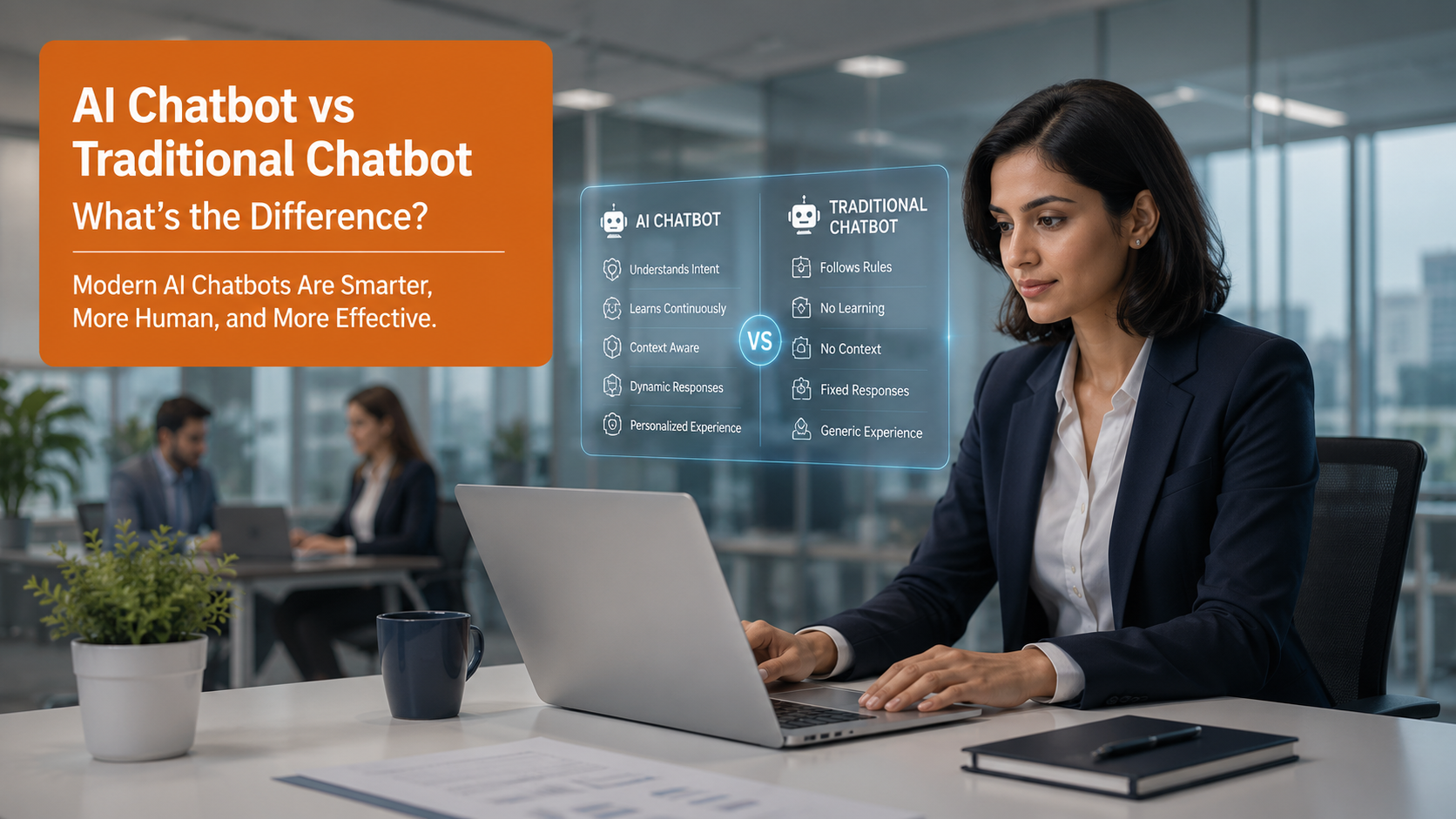
Unlike traditional rule-based chatbots that rely on predefined scripts and decision trees, AI chatbots use technologies such as:
- Natural Language Processing (NLP)
- Machine Learning (ML)
- Generative AI
- Large Language Models (LLMs)
- Conversational AI
These technologies enable chatbots to understand context, learn from interactions, and provide more accurate responses.
AI chatbots can communicate through:
- Websites
- Mobile applications
- Facebook Messenger
- Slack
- Microsoft Teams
- Customer support portals
How AI chatbots work
Modern AI chatbots use advanced algorithms to process and understand human language.
Natural Language Processing (NLP)
NLP helps chatbots understand the meaning behind user messages. Instead of matching exact keywords, NLP analyzes intent, sentiment, and context.
For example, when a user asks "Can I change my booking date?" the chatbot understands the user's intent and provides relevant assistance without requiring exact keywords.
Machine Learning
Machine learning allows chatbots to improve over time by learning from past interactions and user behavior. As more conversations occur, the chatbot becomes smarter and more accurate.
Large Language Models
Advanced AI chatbots use large language models such as GPT-based systems to generate human-like responses. These models can:
- Understand context
- Generate natural conversations
- Summarize information
- Answer complex questions
Business Integrations
AI chatbots can connect with:
- CRM platforms
- Booking systems
- Knowledge bases
- Payment gateways
- ERP software
- Helpdesk tools
This allows chatbots to provide personalized and real-time responses.
Types of AI chatbots
Customer Support Chatbots
These chatbots handle common customer questions, troubleshoot issues, and provide instant assistance.
Lead Generation Chatbots
Lead generation bots engage visitors, qualify prospects, and collect important customer information.
Sales Chatbots
Sales chatbots guide users through products, answer buying questions, and help increase conversions.
Internal AI Assistants
Businesses also use AI assistants internally to help employees access information, automate workflows, and improve productivity.
Industry-Specific Chatbots
Organizations build customized chatbots for industries such as:
- Healthcare
- Travel
- Finance
- Real Estate
- Education
- E-commerce
Benefits of AI chatbot development
24/7 Availability
Unlike human teams, AI chatbots never sleep. Customers can receive assistance at any time, improving satisfaction and engagement.
Faster Response Times
Instant responses reduce customer frustration and help businesses provide better experiences.
Cost Savings
AI chatbots automate repetitive tasks, reducing the need for large support teams. Businesses can handle thousands of conversations simultaneously without increasing operational costs.
Improved Customer Experience
Personalized and context-aware interactions help create a better customer journey.
Increased Productivity
Employees spend less time answering repetitive questions and more time focusing on strategic tasks.
Better Lead Qualification
AI chatbots can automatically identify high-quality leads and route them to sales teams.
Popular AI chatbot use cases
- Customer Support — answer FAQs, resolve issues, and provide technical support.
- Lead Generation — engage website visitors and collect contact information.
- Appointment Scheduling — automate booking processes for healthcare providers, consultants, and service businesses.
- E-commerce Assistance — help customers find products, track orders, and receive recommendations.
- Travel and Hospitality — handle bookings, itinerary assistance, and customer support.
- Internal Knowledge Management — help employees quickly access company policies, procedures, and information.
Industries using AI chatbots
AI chatbots are being adopted across multiple industries.
Healthcare
- Appointment scheduling
- Patient support
- Medical information
Finance
- Customer inquiries
- Account support
- Fraud detection assistance
E-commerce
- Product recommendations
- Order tracking
- Customer support
Travel
- Booking assistance
- Trip management
- Customer service
SaaS and Technology
- User onboarding
- Technical support
- Knowledge base assistance
How much does AI chatbot development cost?
The cost of AI chatbot development depends on several factors:
- Features required
- Platform integrations
- Complexity
- AI capabilities
- Custom workflows
- Number of supported channels
Simple chatbots may cost a few thousand dollars, while enterprise-level AI chatbot solutions can require significantly larger investments. Businesses should focus on long-term ROI rather than initial development costs.
How to choose an AI chatbot development company
When selecting an AI chatbot development partner, consider:
- Industry experience
- Custom development capabilities
- Integration expertise
- Security standards
- Scalability
- Ongoing support
Look for a company that understands your business goals and can create a chatbot solution tailored to your specific needs.
The future of AI chatbots
AI chatbots are evolving rapidly. Future developments include:
- More human-like conversations
- Better personalization
- Voice-enabled interactions
- Autonomous AI agents
- Predictive customer support
- Deeper business integrations
As AI technology continues to advance, chatbots will become even more valuable for organizations seeking efficiency, scalability, and exceptional customer experiences.
Conclusion
AI chatbot development is no longer a futuristic concept. It has become a practical business solution that helps companies automate customer interactions, improve support, generate leads, and increase operational efficiency.
Businesses that invest in AI-powered conversational solutions today are positioning themselves for a more scalable and customer-centric future. Whether you want to automate support, improve lead generation, or create a better customer experience, AI chatbot development can deliver measurable business value. For practical support workflows, see how AI chatbots improve customer support, and for platform comparisons, read AI chatbot vs traditional chatbot.